Iran Walks Right Into Another Trap.
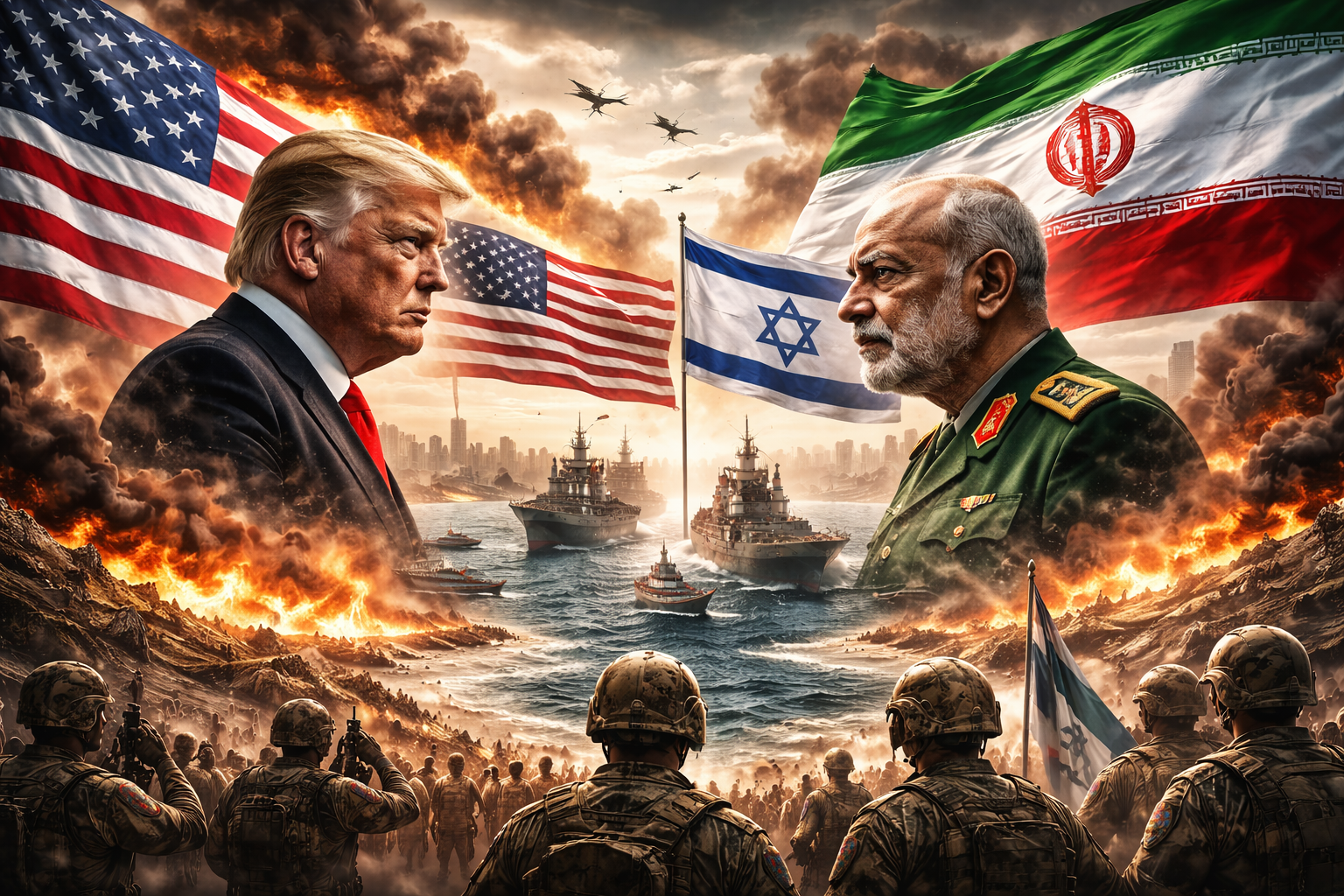
Fragile ceasefire, victory claimed by all. Iran claims success, Washington speaks of triumph, but nothing is settled. Disagreement on Lebanon, Strait of Hormuz under tension, uncertain negotiations. Is this the beginning of peace or a strategic pause before a possible resumption of war?
After more than five weeks of clashes, the announcement of a two-week ceasefire between Iran and the United States, including Israel but surrounded by major ambiguities, appears less like a way out of the crisis than like an unstable suspension. The contradictory statements, the uncertainty over Lebanon, the lack of clear agreement on political terms and the ongoing military movements suggest a tactical pause rather than a real turning point. At this stage, the situation may give the impression of an Iranian victory, but this reading remains precarious as the military and diplomatic parameters remain fluid.
Scenes of jubilation were observed in Iran, where the announcement of the ceasefire is seen as proof that the country has held up in the face of a military campaign intended, according to Tehran, to cause the collapse of the regime. In Washington, conversely, the American administration claims to have won a “ decisive victory ”. This double story illustrates, of course, the fact that everyone speaks to their target population, but above all the strategic uncertainty of the moment. Because if there is an American victory, it seems paradoxical. The Iranian regime is still in place, Iran retains its regional nuisance capacity and its ballistic military power, and the Strait of Hormuz now stands out as a central political lever controlled by Iran.
The contours of the ceasefire nevertheless remain very uncertain. The Iranian authorities evoke a ten-point plan serving as a basis for negotiations, including the lifting of sanctions, guarantees of non-aggression, recognition of nuclear enrichment and an Iranian role in the management of Hormuz. The White House claims, on the contrary, that these conditions do not correspond to the agreement concluded. This divergence reflects the absence of a common text and confirms the fragile nature of the truce.
Mediation would have been made possible by the intervention of Pakistan, with a decisive role for China, which would have offered itself as guarantor of the process. Russia also weighed in the background. This diplomatic configuration illustrates the emergence of a negotiation framework where Western powers are no longer the sole masters of the game. The opening of discussions in Islamabad confirms this evolution towards multipolar diplomacy.
But the main area of friction concerns Lebanon. Iran says the ceasefire includes this theater. Israel and the United States argue the opposite. The Israeli Prime Minister's Office explicitly indicated that operations against Hezbollah in southern Lebanon would continue. Israeli strikes were also reported shortly after the truce was announced. This divergence creates an immediate risk of resumption of hostilities.
Tehran has already warned that continued strikes in Lebanon could jeopardize the reopening of the Strait of Hormuz. This link between Lebanon and maritime navigation transforms the truce into an extremely fragile balance. The war could resume not directly between Iran and the United States, but by indirect escalation via Hezbollah.